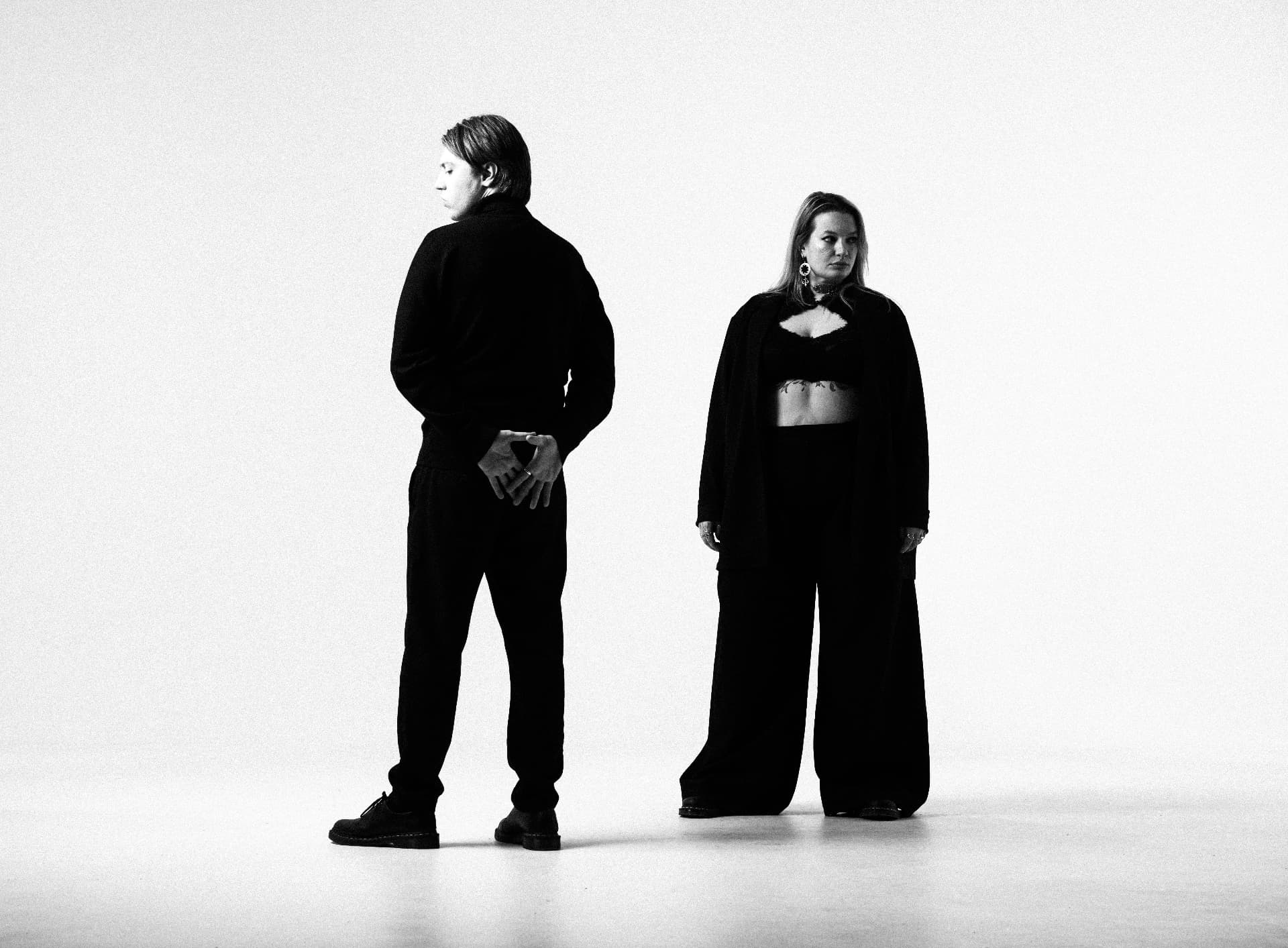
Clockwork Animals // Fuzz Pedals, Panic Attacks & an Orchestra on Standby
Clockwork Animals make beauty feel slightly dangerous. Jack and Elena talk unresolved chords, writing through anxiety, giving a trio room to breathe and the dream of swapping fuzz pedals for an orchestra — with a possible hyperpop detour through Nine Inch Nails.
Your music seems to thrive on the tension between something beautiful and something slightly unsettling, particularly on tracks like Walking Shadow and Fantastic Future Dream. Is that contrast something you consciously build into your songwriting, or is it more of a natural reflection of how the three of you write?
JackI would say it is both a conscious and subconscious action when it comes to songwriting. For example, Walking Shadow was created when I was trying out different chord changes and went from an A minor into a Bbmaj7 chord and liked the unresolved tension. From there, a whole song was consciously built from that initial unsettling feeling those chords gave me. The subconscious element comes from the influences we each have. A massive influence when it comes to this mindset for choosing chords is David Bowie, particularly in the effortless way songs can switch from major to minor chords.
ElenaWhen the band was formed, Jack brought in some highly evocative music. Leaning into the various emotions evoked made writing the lyrics for both of us a very easy task. I'd like to think that the bass brings a groove that helps delve into that dissonance, whilst finding stable ground to enjoy the guitar roller coaster.
Anhedonia feels like a particularly interesting left turn within the Clockwork Animals sound. It starts in this relatively restrained, almost grunge-tinged space before allowing the vocals and atmosphere to take over. What made you want to hold back rather than immediately lean into the heavier side of the band?
ElenaThe choice of slowly building the track is intentional because Anhedonia is inspired by my own experience with anxiety and OCD. 'Out of breath, fists pound on my chest' must sound familiar to everyone who has felt a panic attack knocking at the doors of your brain. The 'twisted curse', 'the more I pull the strings, the less I move forward' and 'forced to decorate hell' are a mirror to what it means to cope with an anxiety disorder, to function with the feeling of not going anywhere: 'lost intents, empty plans on my hands'. The solo after the two final choruses is the embodiment of a burst at the end of the numbness, but whether this is a burst of release or exasperation is left to the listener to decide.
JackAs the guitars are at the forefront of most tracks we have, I wanted to take a rhythmic approach when it came to Anhedonia and allow the vocals and bass to take the lead. I think the minimalist guitar riff and lyrics Elena wrote lend themselves to a slow build-up. Ultimately, I have always wanted Clockwork Animals to represent all moods and feelings.
One thing that really stands out across the Fantastic Future Dream EP is how much room you leave for atmosphere — guitars can feel huge without necessarily being played in a traditionally 'heavy' way. How important is texture to the band, and do you tend to think about the sonic space of a song before you think about the actual riffs?
JackI definitely think about the sonic space of a song before I think about the actual riffs. A lot of the Fantastic Future Dream EP was written by myself on Logic Pro when I had no band and had to fill the track with guitar layers to create the semblance of what you would call a song. I always had in my mind where the songs would go and the moods they would convey, but what I play is always informed by the song itself and where other instruments will sit in the mix. Being a trio, it is about striking a balance between creating a big sound whilst simultaneously allowing the songs to have room to breathe. As a guitar nerd, I love layering and adding overdubs, and as a music fan the intricate parts are something I'm always looking for and noticing.
ElenaAs far as texture is concerned, we are definitely aware of needing to translate the fullness of our recorded sound onto the stage. This is why I often write bass lines using chords, as it allows us to sound fuller and more textured without losing the groove of the rhythm section.
There are some fairly big names in the band's list of influences — My Bloody Valentine, Siouxsie and the Banshees, Radiohead, Sonic Youth, Killing Joke and Nirvana — but you don't sound like you're simply recreating any one of them. How do you take influences that are so stylistically different and stop them from pulling the songwriting in five different directions?
JackI think that comes from experience; the first songs I ever wrote would sound like whatever I was listening to at that given moment. Eventually, over time, you grow more confident in your ability to find your own voice and tap into certain artists and influences. With the bands listed above, it can be a mood, a particular guitar tone or how the song is structured. Creating a guitar riff can make me feel a similar way to how a song by a certain band makes me feel — I'll then purposely steer away from that and think, 'How would a guitarist from this band play and react to this?' or 'Where would this particular artist take the song?' Overall, it's all trial and error.
ElenaFor me, it is the perfect pull between different but complementary influences, and how we interpret them, that allows our sound to be born. Further to the bands above, the bass players I take inspiration from belong to even more diverse genres and sounds: Peter Hook being the most directly linked, but then Flea, Brian Ritchie, the walking bass of blues and Motown, or even early 00s R&B.
Fantastic Future Dream itself seems to ask some pretty uncomfortable questions about the direction we're heading in, particularly around animal exploitation and humanity's relationship with the world around it. When you're writing about something with a bigger social or environmental idea behind it, do you want the listener to understand the message, or are you more interested in creating a feeling and letting them find their own meaning?
ElenaA bit of both. We had the title before we had the lyrics. It was my idea to make Fantastic Future Dream a song about animal exploitation, but we chose a different direction: the song is written from the perspective of the animal, who is very well aware that there is no hope for them, but instead of desperation and sadness they are sarcastic, disillusioned and spiteful towards those who are allowed a different outcome in life. We also intentionally left the topic undisclosed, in some sort of thinking trap: if you read the lyrics and think that they apply to any kind of abuse or injustice, it's because they do! We wanted to make it clear that there is a thread that sews all evil, and it is someone in a position of power determining the fate of someone who is disadvantaged. We chose animals not only because they are the topic closest to us, but also because too many times it is left behind in the biggest conversations.
JackIt depends on the song. The EP title track lyrics were written primarily by Elena and the message is clear. Elena and I are passionate about animal rights and have been vegan for a number of years, so I believe it was only right that it is a subject that we tackle.
You've now got a body of work that moves quite comfortably between shoegaze, post-punk, grunge, dream pop and darker alternative territory. If you had to deliberately push Clockwork Animals somewhere you've never taken the band before — without worrying about whether it would fit what people currently expect from you — what would you want to explore next?
JackIn a dream world with access to an orchestra and unlimited studio time, I would love to make a collection of songs influenced by the likes of Björk, Nick Cave, Scott Walker (particularly Tilt onwards) and Mina. I would ditch the fuzz pedals, buy a baritone guitar and do my best Ian Curtis vocal impersonation whilst Elena sings in Italian.
ElenaWhat Jack said, OR I would love to explore the realm of hyperpop but blend it with Nine Inch Nails. I absolutely love the aesthetic and would love to see how it feels to be on stage by focusing on one instrument at a time — vocals or bass.
Clockwork Animals live in the space between tension and release: anxiety turned into atmosphere, dissonance held down by groove, and big ideas delivered without spelling out every answer. Next stop could be an orchestra, Italian vocals or Nine Inch Nails crashing into hyperpop. Sensible options were never really in the room.
Where to find Clockwork Animals
Follow them before they get too big to reply to your comments.